
What Are Immersive Architectural Visuals? Walkthroughs, Animation, and Beyond
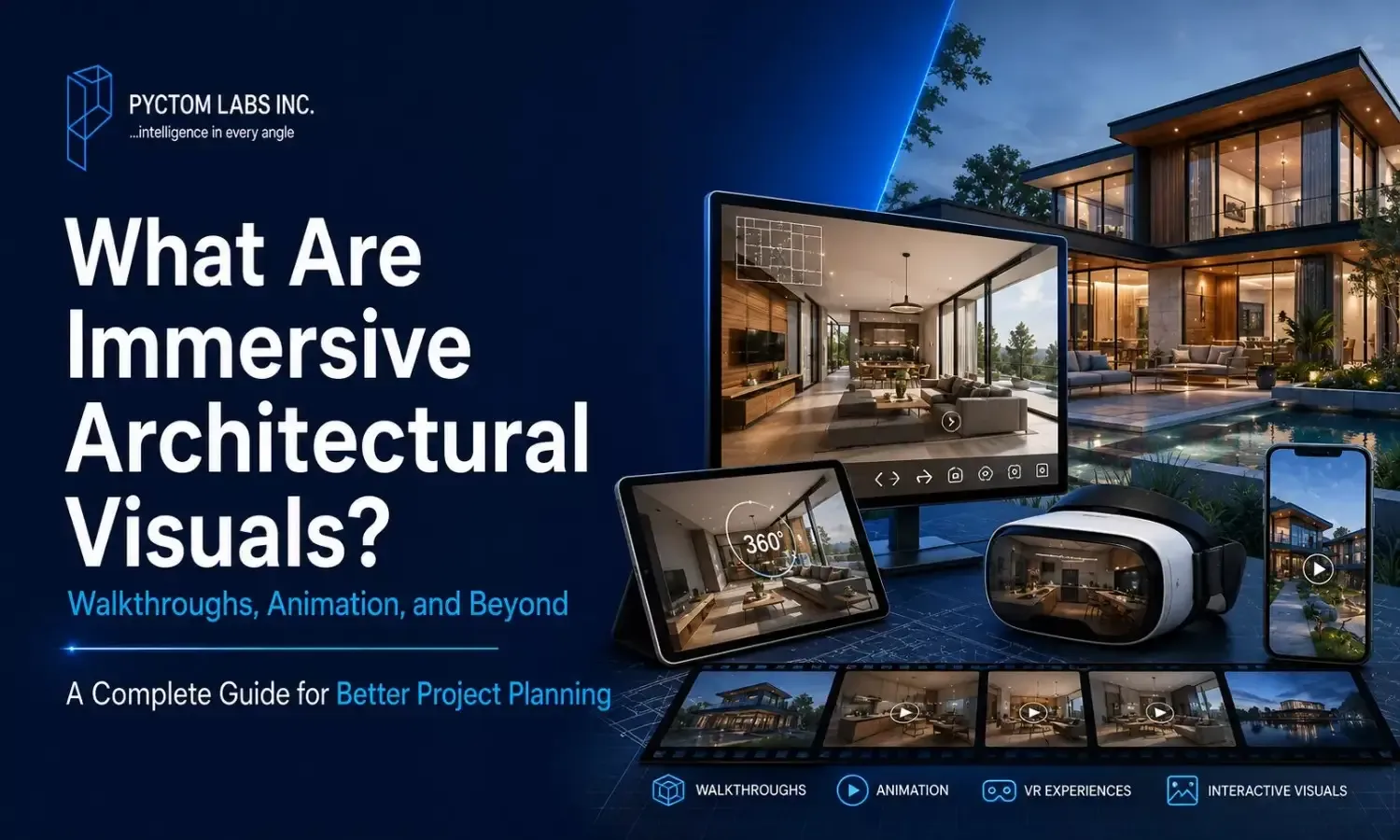
Table of Contents
A traditional floor plan tells your clients where the walls go, but an immersive architectural visual shows them exactly what it feels like to stand inside them.
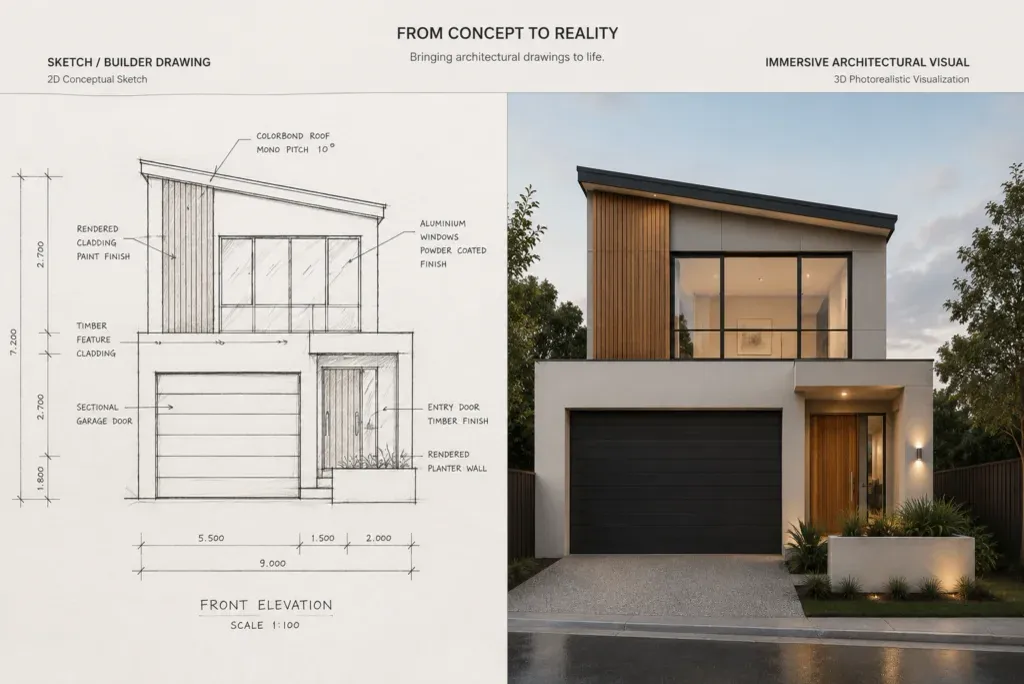
For Canadian home builders and developers, immersive architectural visualization is a type of digital asset. These assets use cutting-edge 3D rendering software to let your buyers walk through a space, try out finishes, and see a property before you even break ground.
This is an important project management and sales tool in a competitive market. Buyers who experience a space early make design decisions more quickly, ask for fewer changes during construction, and are more confident in pre-construction sales.
Why Immersive Formats Outperform Static Renders
Photorealistic still renders have been the standard for years, but they only show one moment in time from a set angle. Immersive visualization is the answer to the psychological distance that flat images create.
- Accurate Scale Perception: The most common element that clients misjudge from 2D drawings or still renders is spatial scale. Immersive formats provide a realistic impression of ceiling heights, room depth and spatial flow for buyers.
- Contextual Light and Volume: Your clients will be able to visualize how natural light flows from the windows into the living spaces during the day.
- Reduced Risk: When a buyer has virtually walked through their layout, they are much less likely to say that their space looks smaller than they thought it would once framing starts.
The Main Types of Immersive Architectural Visualization
There are different types of visual tools that are needed at various stages of your development pipeline. Whether you’re pitching city council or launching a pre-sales campaign, the right format will help you stay on track with your project goals.
3D Architectural Walkthroughs
A 3D architectural walkthrough is a pre-rendered video that takes the viewer on a carefully planned tour of a building.
- Ideal for: High-converting social media campaigns, investor pitches, and multi-unit residential marketing.
- The Value: A 60-second walkthrough can provide a home builder with a full picture of the lifestyle and finishes of a model home before breaking ground on a new subdivision.
Architectural Animation and Flythroughs
While walkthroughs focus on the interior experience, flythroughs scale upward and outward. These animated flyovers provide a complete view of the building, the site topography, landscaping, and the surrounding neighborhood context.
- Ideal for: Presentations to municipal planning, zoning approval and community stakeholder meetings.
- The Value: When proposing a multi-family townhome development, it is important to communicate clearly about setbacks and massing. A realistic flythrough provides a clear picture of the project in its real setting, minimizing the approval process back and forth.
Real-Time Rendering
Real-time rendering produces visuals on the fly as you interact with them, using engines such as Unreal Engine 5 or D5 Render.
- Ideal for: Design development meetings and interior selection center coordination.
- The Value: Rather than waiting days for new renders, you can change flooring from light oak to dark walnut in the blink of an eye during a client meeting. It turns selection sign-offs into an efficient, live conversation.
VR Walkthroughs
Your client wears a virtual reality headset and is placed in your design at a true 1:1 scale.
- Ideal for: Luxury residential and commercial projects.
- Value: VR removes layout uncertainty for clients who find it hard to read traditional blueprints. When a buyer gets a first-hand look at the actual size of their future home, they immediately feel the confidence to sign on to large-scale contracts.
Web-Based and Mobile Walkthroughs
Web-based walkthroughs provide interactive experiences through a simple link, without requiring special hardware or apps.
- Ideal for: Reaching out-of-province buyers, international investors, and growing digital marketing funnels.
- The Value: If you’re selling pre-construction condos to people moving across Canada, a web link lets them explore your layouts at their own speed, from their own home.
Integrating Visuals Across Your Project Lifecycle
For the best ROI, incorporate these assets into each stage of the build.
1. Concept and Design Phase
Use real-time rendering early to identify any misalignment between your design vision and your client’s expectations. It is not expensive to fix an error on a screen, versus moving a wall on site.
2. Approvals and Planning Phase
Use flythroughs and shadow studies for municipal submissions. Review cycles accelerate when planning committees can see how your project will respect the existing streetscape.
3. Pre-Sales and Marketing Phase
Use film-based walkthroughs and online interactive tours to raise early capital. When a buyer can see exactly what they are buying, they commit faster.
4. Construction Coordination
Use highly accurate 3D assets to align your trades and site supervisors. When the complex architectural details are understood visually, it helps to avoid expensive misinterpretations in framing and finishing.
Move Your Next Project Forward With Pyctom
Immersive architectural visualization closes the gap between your structural expertise and your buyer\’s imagination. Selecting the right asset for each stage of your pipeline speeds up your sales cycle, streamlines your approvals, and eliminates costly communication errors.
Whether it is for your next residential or commercial project, Pyctom can build the asset package for your budget and construction timeline.
Which project on your list has the shortest timeline? If you need assistance, schedule a free consultation and professionals will contact you.
Quick FAQs
What is the practical difference between a walkthrough and a flythrough?
A walkthrough focuses entirely on the internal user experience at eye level, acting as a guided indoor tour. A flythrough operates at a macro level, utilizing aerial or exterior camera paths to communicate site context, building massing, and landscape integration.
Do clients need specialized equipment to view these assets?
For premium VR walkthroughs, a dedicated headset is required, which builders typically host in their sales centers. However, web-based and mobile walkthroughs require no special hardware or software, running smoothly on any standard smartphone or laptop.
How closely do these immersive visuals match the final constructed building?
When your visual assets are built directly from detailed BIM files and accurate material specifications, the final physical space will mirror the digital environment with exceptional precision. High accuracy depends on providing complete design files early in the visualization process.
Disclaimer: The information provided in this blog is for general informational purposes only. For professional assistance and advice, please contact experts.